
How to EF?
Automated > manual measurement
Biplane (Simpson method)
Normal 50-70%
Auto-EF still needs a good EKG
Ejection fraction (EF) formulas: EF = SV/EDV x 100 or EF = (EDV - ESV)/EDV x 100
Lang et al, 2015
Why EF?
"Simpsons method of discs"
Good, old, validated parameter
In every echo report
Prognostic relevancy
EF is possible with echocardiography, ventriculography *, CT, MRI, scintigraphy
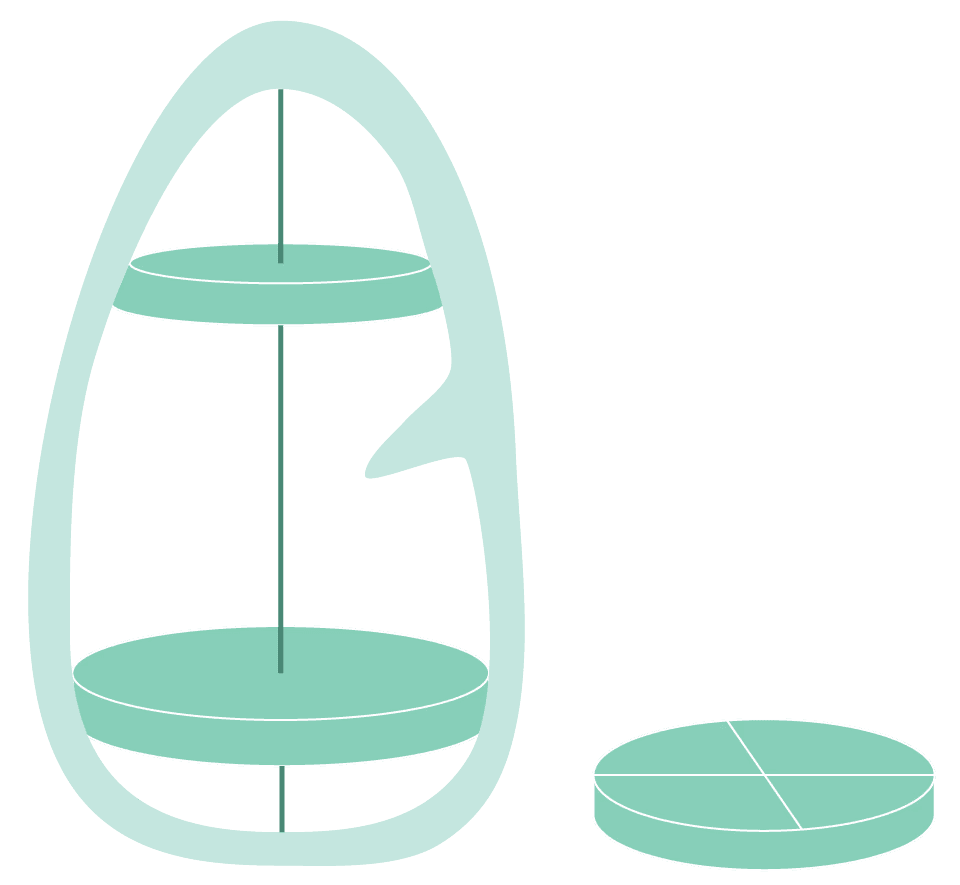
Biplane EF (Simpson)
Surrogate parameter
Context!
‣ Dilated LV & reduced EF (with normal SV)
‣ Small ventricles & (high) normal EF (and decreased SV)
‣ Volume overload — MR
We all see EF differently
‣ Intra- & Interobserver variability is high
Measures volumes (3D>2D)
2D Strain (longitudinal)
"Early" parameter for many diseases (LV, RV, LA & RA)
Difference in EF & strain — that is when it gets interesting
Reproducible
Less variability due to software support
Changes in depth & frequency changes strain values (e.g., greater depth, marginally higher GLS) ➜ insignificant
Changing in gain, frame rate does not change strain
Excellent parameter for prognosis — as a rule ➜ good Strain, good survival, reduced Strain, worse survival (EF correlates less)
Intervendor variability (around 6% in Strain, around 20% in E/A, E >10%, IVS >10%)
Dimensionless measurement
Like a rubber band — 10cm vs 8cm = GLS -20%
Early 2000s TDI Strain — limited (1 small area, difficult, variation in results)
Speckle Tracking — US interference due to small myocardial structures (idea 1988)
No volume measurement
Only longitudinal measurement
No Doppler technique (less angle dependent)
Strain Imaging (still) needs a good EKG (2025)
Reproducible!