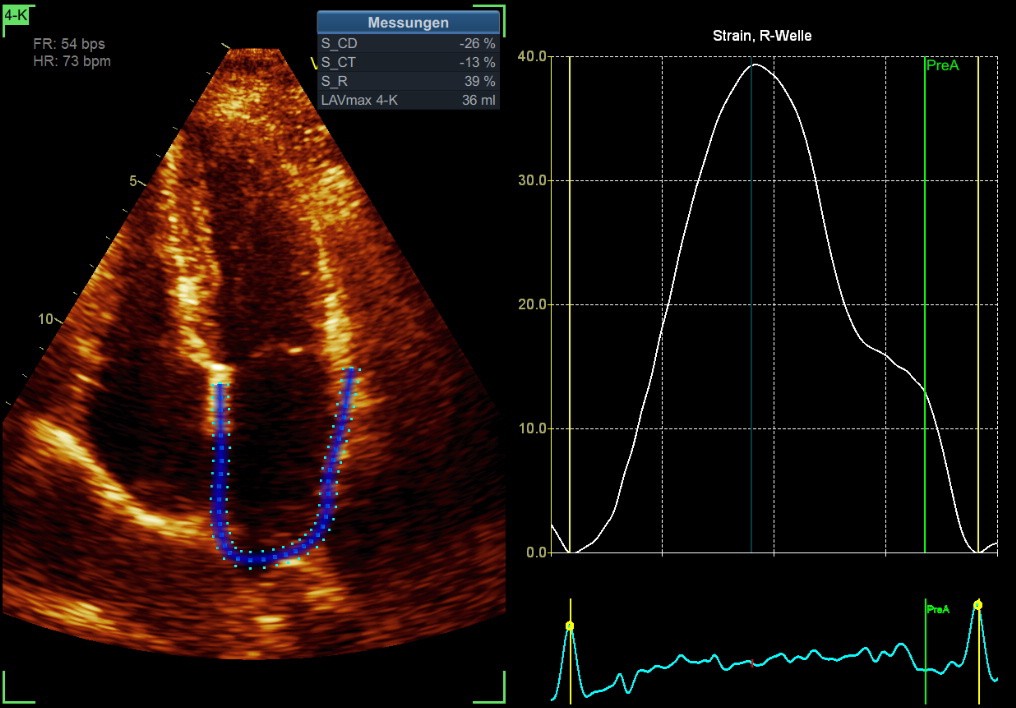
Normal values Strain Imaging — LA Strain
Don’t cut off the LA roof
A specific software should be used
R to R is generally more robust than P to P evaulation (EKG)
20-39a ➜ LASr 47%
40-59a ➜ LASr 41%
>60a ➜ LASr 36%
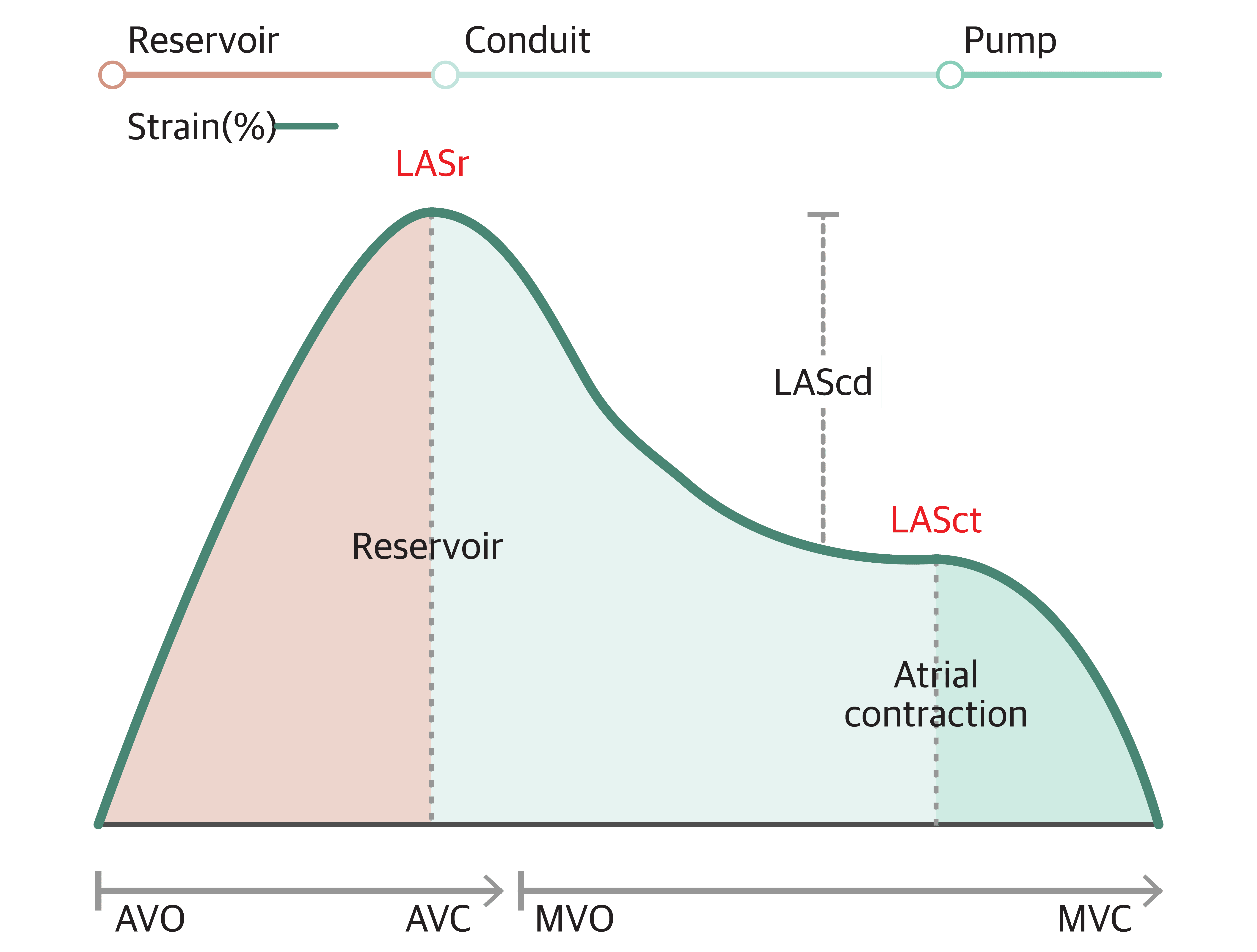
LASr: Left atrial stain reservoir
(normal value around 39%)
LASct: Left atrial strain contraction
(normal value around -17%)
AVO: Aortic valve opening
AVC: Aortic valve closure
MVO: Mitral valve opening
MVC: Mitral valve closure
LA functions
The reservoir phase (LASr)
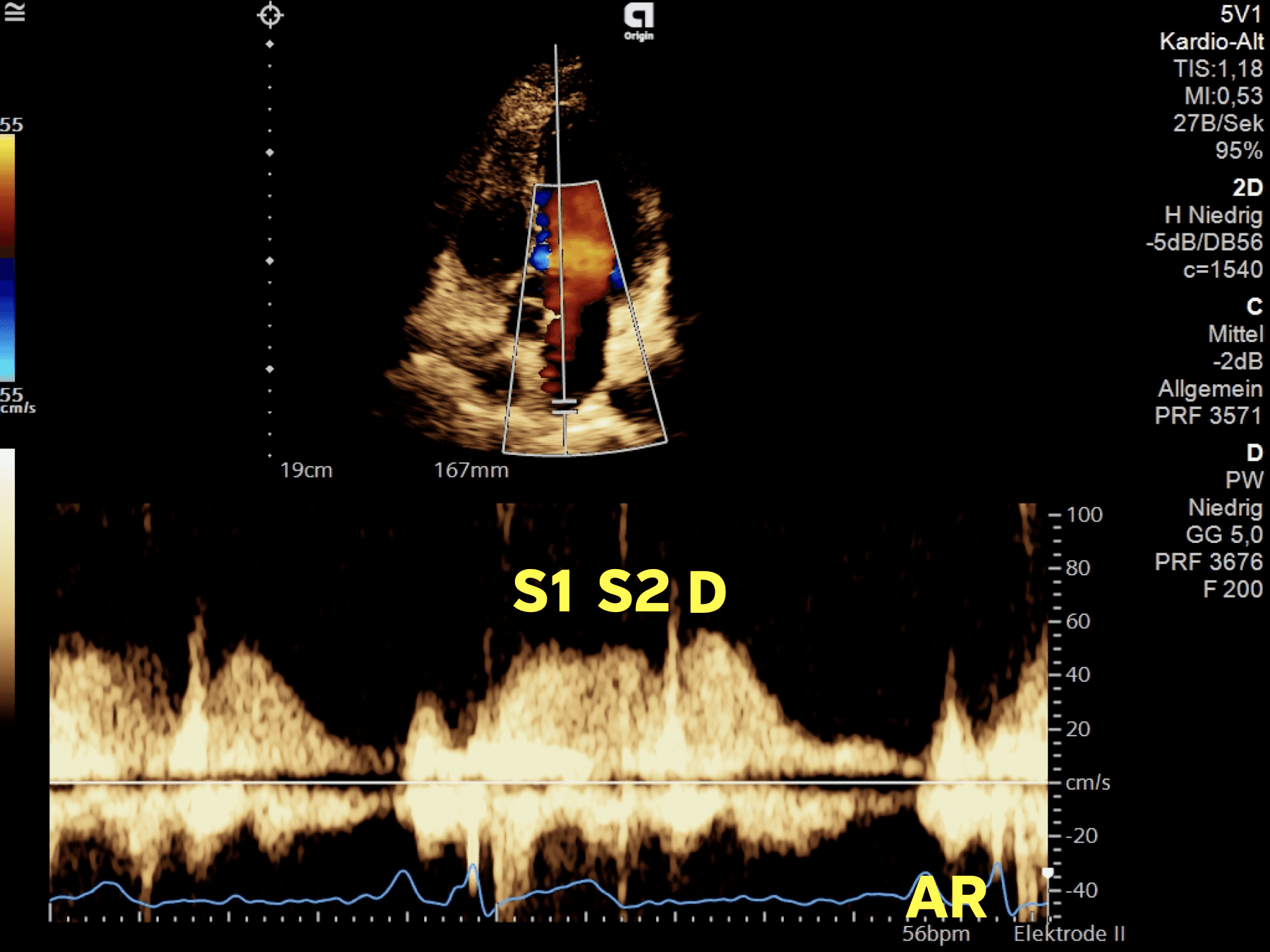
LA reservoir takes place during LV contraction (systole). During LV systole, an elastic recoil after the LA contraction leads to an expansion of the LA dimensions & to a reduction of the LAP. Blood is sucked in from the PV (PV signal S1)
LV contraction leads to displacement of the mitral valve annulus towards the apex. The LA roof is fixed and does not move, so the LA is stretched longitudinally, thus resulting in the maximal stretching & dimension at the end-systole of the LV
Elevation in the LA dimensions leads to a decline in LAP. The RV systolic pressures are simultaneously measurable at this time period (translation of the pressures) ➜ blood flows into the LA (S2 PV signal)
The LA is the blood reservoir during LV systole
LA filling occurs because of durch stretching (LV contraction), the systolic RV pressure & LA compliance
The conduit phase (LAScd)
The volume shifts can be calculated:
➜ LASr LV-filling = LA maximal volume — LA minimal volume
➜ LAScd LV-filling = LVSV — LAr volume
This calculation ignores the insignificant back-flow volume of the pulmonary veins (no real measurement possible in echocardiography — AR is small)
LAScd = D-wave (PV)
The contraction of the LA (LASct)
LA systole with active myocardial shortening
The LA contraction phase is responsible for 10-20% of the LV filling
In the elderly, there is more dependency on atrial contraction ➜ 35-40% LV filling
A small shift of volume back to the PV is seen in healthy individuals as well (Ar)
Nakatani S, 2011
Normal LA Strain
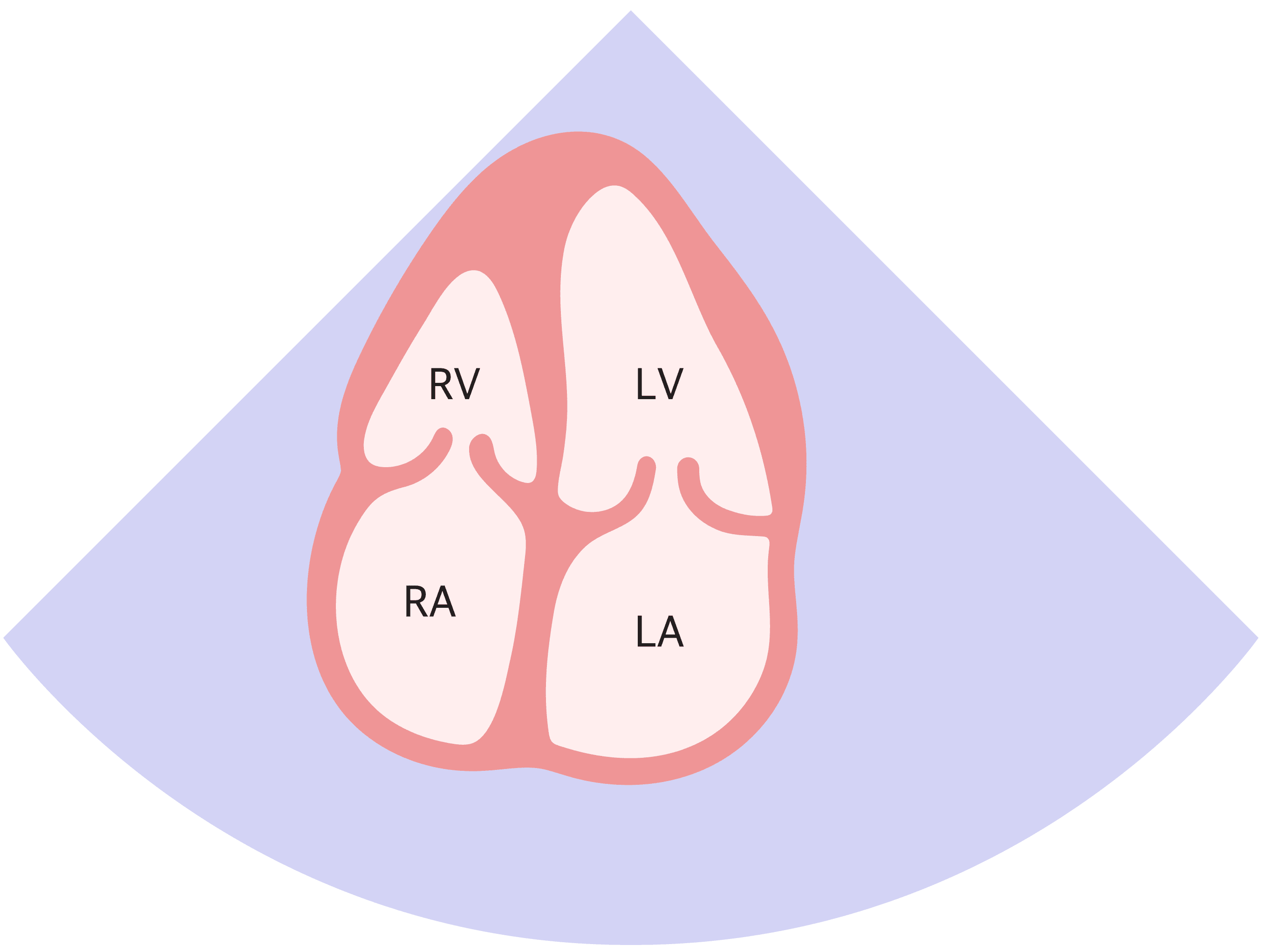
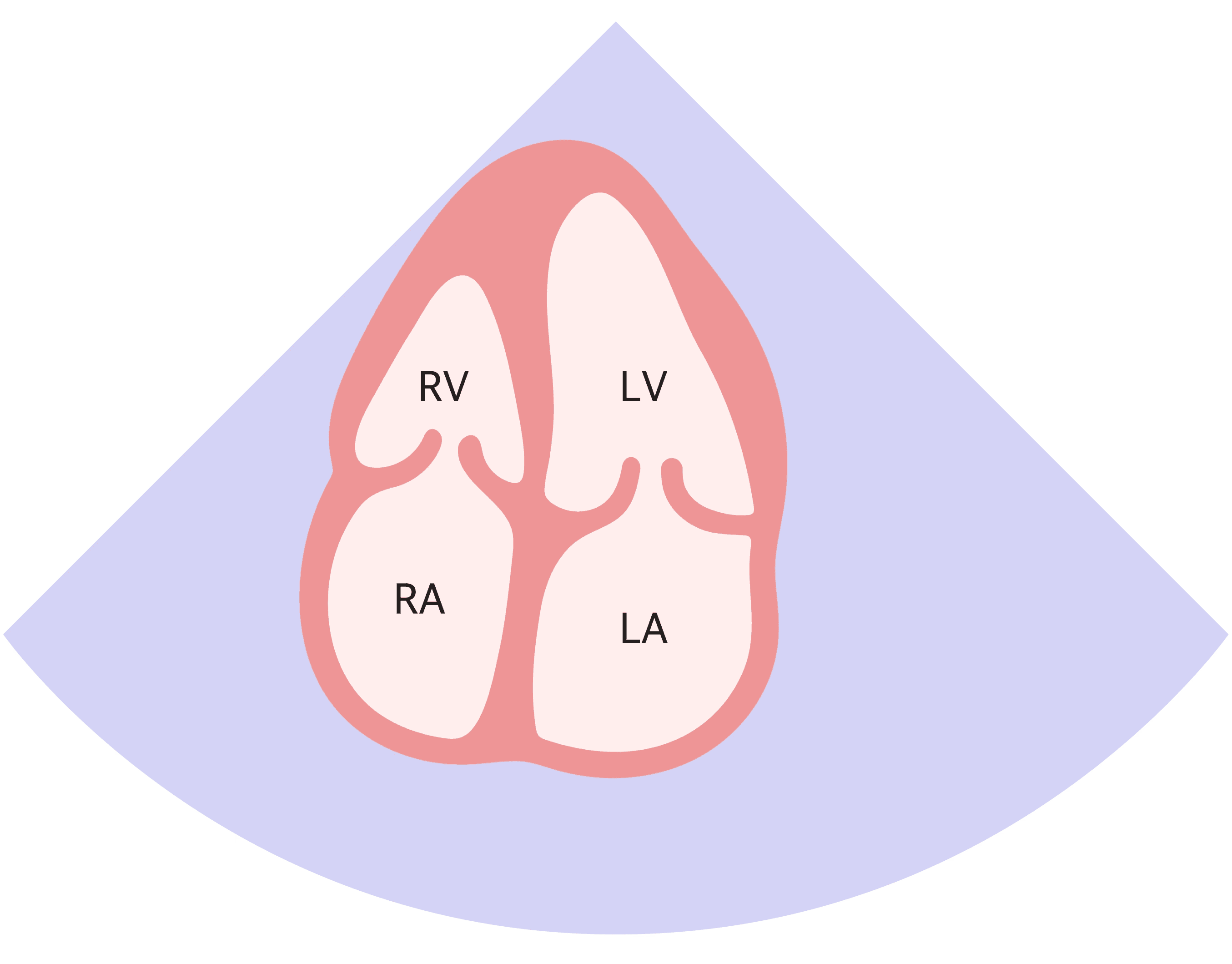
LA-Strain in the 4-ChV & 2-ChV
Optimally always 4-ChV & 2-ChV
Clinically easier & often sufficient is the LA Strain of the 4-ChV
R to R > P-wave to P-wave (easier to see and to measure) in the EKG
PALS = LASr
PACS = LASct
Conduit = LAScd